InfoTypography work being presented at SIGGRAPH this week

This week I will be presenting at ACM SIGGRAPH (the top conference in graphics and one of the most prestigious in Computer Science) the work that Johannes Lang and I have done in Infotypography. We looked at how people perceive typographic parameters. This could support the use of these parameters to represent information.

Here is a teaser of the talk (30 seconds):

Here is a fuller, 15 min presentation ():

Here are two links to the paper:
https://doi.org/10.1145/3528223.3530111
Local copy

Here is a website with resources for using it:
https://nacenta.com/infotypography

For those of you who are in Vancouver attending SIGGRAPH, the presentation is:

When: Thursday August 11, 2022
Where: East Building, Ballroom C
Session: Perception

Student Paper on Representations and Transformations

Adam Binks (A PhD Student at the University of St Andrews) and myself (Miguel Nacenta) just published an article in the International Journal of Human Computer Studies) about our recent research.

Adam built a new tool to support people when transforming complex networks of thoughts and ideas into text prose. The tool itself (called Write Reason) and a short description of what we found when we studied essay writers using the tool is accessible through the WriteReason site.

One of the most interesting things about our findings is that there is a lot of interesting stuff going on in between the creation of different representations of the ideas. In other words, transformations between representations are much more complex, interesting and important than we thought before.

This post is also in the VIXI website.

Post-Doctoral Researcher Position

I am looking for a researcher/scientist interested in Human-Computer Interaction, Cognition and Information Visualization, to become part of our new and growing VIXI group as a Post-doctoral fellow.

Where: University of VictoriaVictoria, British Columbia, Canada
What: A Post-doctoral Fellowship, 1 to 2 years in length
When: Applications being evaluated now, until position filled. Start is negotiable.

Requirements

  • An PhD degree in computer science, psychology/neuroscience, software design or software engineering, or a completion date for such PhD within the next few months.
  • Evidence of ability to publish in their area of expertise.
  • Experience with at least one of the following methodologies (in no particular order of importance):
    • Qualitative observation and qualitative analysis (e.g., grounded theory).
    • Controlled experiment design, execution and analysis.
    • Advanced human-sensing methodologies. For example gaze-tracking, EEG, FNRIS, motion tracking.
    • Contextual analysis.
  • Ability to program.
  • A willingness to work with and mentor students at all levels (undergraduate, MSc, PhD).

Topics and Interests

The candidate will work with current research students, with the main supervisor (Dr Miguel Nacenta) on common projects, and will also have time to further their own research. Current research interests of Dr Nacenta include:

  • Supporting non-experts in complex cognitive tasks such as planning, estimation, prediction and problem solving through novel technologies.
  • Enabling groups and communities to work effectively together on complex cognitive tasks such as planning, estimation, prediction and problem solving.
  • Finding effective representations of problems and data to enable better communication and enhanced problem solving.
  • Reducing the friction imposed by current interfaces and input devices on complex cognitive tasks.
  • Novel interfaces and visualization techniques for reading and thinking.

You can access recent published work by Dr Nacenta through his Google Scholar Profile

What to do

If you are interested in becoming our partner in learning and research, send an e-mail to nacenta(at)uvic(dot)ca with the following information:

  • A CV or resumé which includes a list of publications.
  • A cover letter that describes why you’d like to work with us, what you main skills are, and your research area of interest going forward in your research career.
  • The names, positions, and e-mail of 2 referees.

What we offer

One to two year employment as a full member of our lab and the Department of Computer Science of the University of Victoria; Salary starting at CAD$50K, but negotiable based on merit and/or experience of the candidate; Opportunities to contribute to teaching (only if so desired); A supportive community of scholars and students.

Who we are

The Victoria Interactive eXperiences with Information (VIXI) group is a newly formed research group in the areas of Human-Computer Interaction, Visualization and Cognition. With three faculty (Sowmya Somanath, Charles Perin, Miguel Nacenta), and over 16 students at different levels, we aspire to be a diverse learning community that supports the growth of each member while also contributing to research at an international level of excellence and impact.

Where we are located

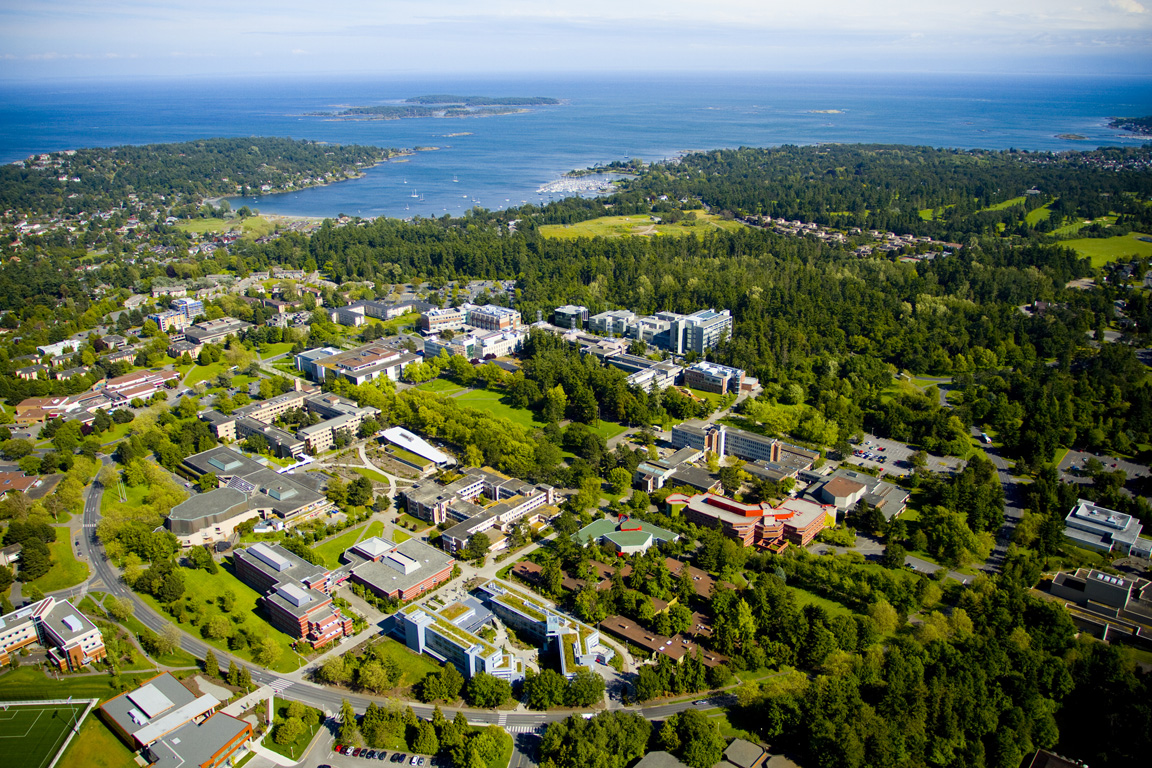
Victoria is the Capital of British Columbia, the westernmost province of Canada. Surrounded by water, at the southern tip of Vancouver Island, is part of a vibrant urban area of close to 400,000 inhabitants, yet surrounded by amazing nature and parks. The city has an extensive network of cycling paths (for commuting or leisure), great access to outdoor activities (kayaking, scuba diving, mountain biking, hiking, skiing – further north in Vancouver Island or across the Salish strait), and good connections through its International Airport and ferries to the mainland and the United States. The city is extremely child-friendly and has probably the mildest climate in Canada, with an average temperature in January of 5 degrees Celsius and mild summers. Average precipitation is about half that of nearby Vancouver (107km away as the crow flies) due to the rain shadow effect of the Olympic Mountains to its South.

We acknowledge and respect the lək̓ʷəŋən peoples on whose traditional territory the University of Victoria stands and the Songhees, Esquimalt and W̱SÁNEĆ peoples whose historical relationships with the land continue to this day.

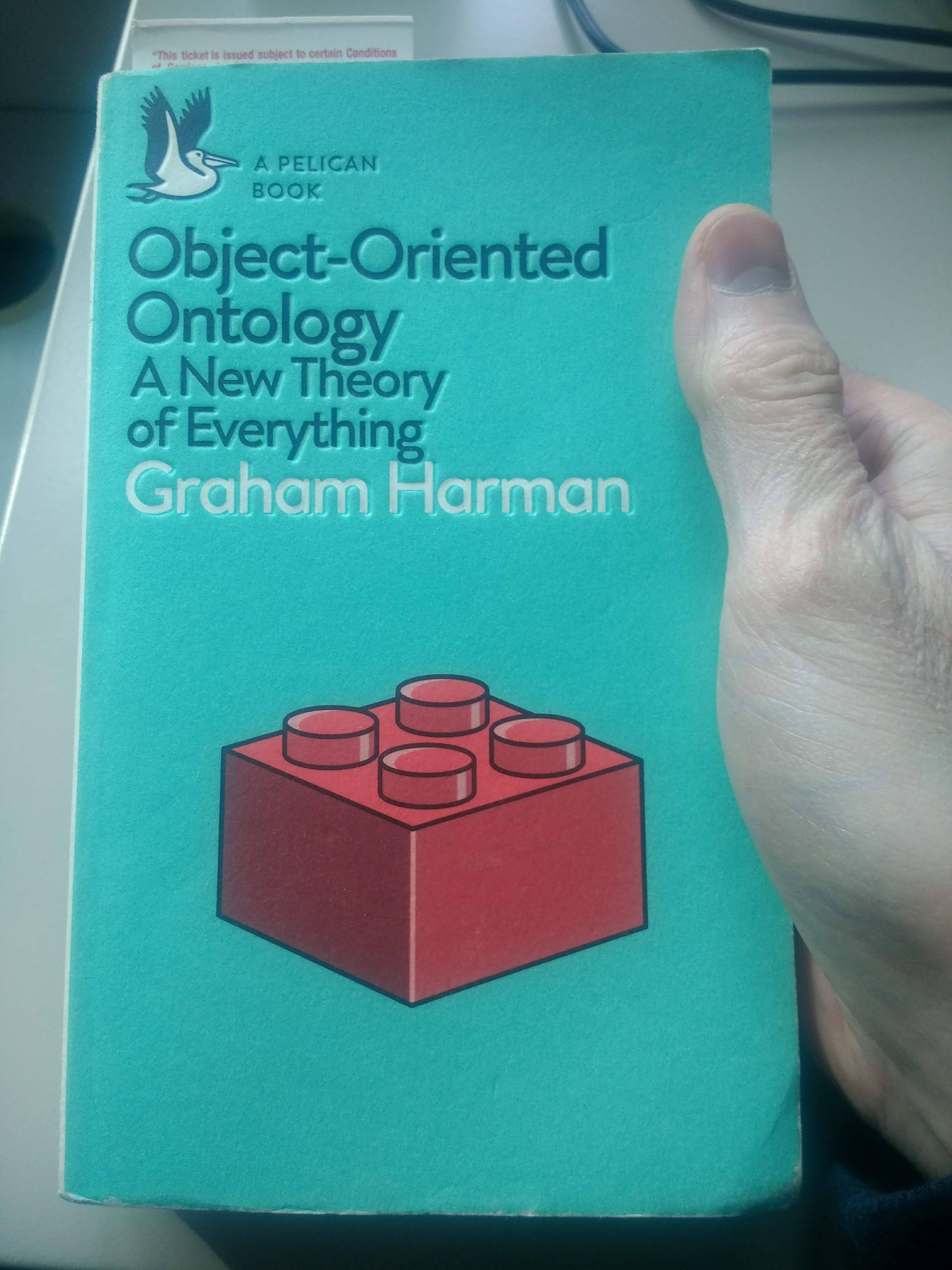
Book Light Review: Object-Oriented Ontology: A New Theory of Everything by Graham Harman.

This is a first blog review in a series for books that I finish reading for professional reasons, usually within the context of my research. I call them “light reviews” because they are not meant to be comprehensive and because the book might fall outside my direct domain of expertise (information visualization, Human-Computer Interaction, Infotypography).

[link to publisher’s site]
img_20200308_143838821

Why I got it/read it?

The title looked promising; I’m currently interested in how people model the world, and both ontologies and theories are good examples of forms of knowledge that represent the world for the human mind. Also, I cannot generally resist buying these kind of books at one of my favourite bookstores in St Andrews: Topping and Co. (I’ll miss you!).

What did I learn?

Object-Oriented Ontology belongs to a current trend of philosophical work that calls itself “realist”. It is quite contemporary and seems very influential in other areas such as Architecture and History. OOO relates to Latour’s philosophy (I’m generally a fan), and his Actor-Network Theory. OOO addresses the issues of truth, reality (not the same thing as truth), knowledge, causation, and perception.

A key part of the intent of this theory is to remove the human/mind/cognition as a central actor of any theory of the universe. It tries to create a theory that does not depend on humans or any other thinking being to explain reality and the world. Objects relate to objects, and humans, the mind, etc. are just other types of objects. In OOO if the proverbial tree falls without anyone noticing it, definitely still fell. At the same time, in a direct line from Ortega y Gasset’s philosophy, it denies the possibility of directly knowing real objects, since these are not directly accessible (even by other real objects), and instead only relate to other real objects through other kinds of objects (sensory objects), and their qualities (real qualities and sensory qualities). From the relationships between these four types of things, OOO derives, initially quite unintuitively, but also quite convincingly (at least for me) the concepts of space, time, and a full system that explains how do we actually get to access objects (surprise: through metaphor), what we can learn about them, and also new forms of analysis.

Objects in OOO are a very generic term that includes things that are not material, or even imagined etc. For example, a commercial company is an object, Spain is an object, a dream is an object and, of course, material objects are also objects. Combination of objects are also objects. Objects not being directly accessible is provided as an explanation of why a description, formal description, or collection of properties of a real object is never going to replace the real object itself (this is connected to Ortega’s perspectivism).

I found particularly useful the developed terms of undermining and overmining. This has to do with abstraction and compositability. Other existing theories are undermining if they try to reduce objects to its components, and overminining if they try to explain everything based only on the properties that it has. OOO provides a way of defining objects as a balance between overmining and undermining.

What did I like about the book?

The book is actually quite accessible to non-philosophers, and is a good read. It is also quite good at relating OOO to existing contemporary and non-contemporary theories and philosophies, which makes me feel a bit more confident about my knowledge and gives me a useful context within the realm of theory.

What did I have trouble with?

The mechanisms of “vicarious causation”, in which objects affect other objects through the creation of intermediate objects was difficult for me to digest. I’m not sure if this is a weakness of the theory, the book, or just something that is difficult to grasp.

How it can help (with my research)?

OOO seems like a useful lens to look and understand the role of humans in the larger systems where they inhabit, without having to reduce everything to the mechanistic, reductionistic or materialistic views of contemporary hard sciences. It might be particularly useful to explain interaction and the interface (although I haven’t worked this out yet), and it might enable a nice way to reconcile results and theories from the social and humanities side of the spectrum with more formal views from math, physics, data science and cognitive science.

Open questions and other thoughts.

In some ways, the inescrutability of real objects or “objects in themselves” remind me of the identity functions (self referential) in category theory (from Maths).

Worth reading (1-5)?

For it’s potential to be useful (to me and the field), how it made me think and see things in a different light, and how it helped me learn about OOO and other bits of contemporary philosophy, I think this deserves a 5 (highly recommendable)

Prize from “La Recherche” to our Transmogrifiers paper

The French Science magazine “La Recherche” gives annual prices to contributions in different areas of scientific knowledge that come (at least in part) from French laboratories. This year they awarded one of those in the category of Information Sciences to the work that Christophe Hurter, John Brosz, Sheelagh Carpendale, Ricky Pusch and myself carried out and was published at UIST: Transmogrifiers.

tranmogrifiers2The work is a paper and a tool that enables very fast, intuitive non-linear spatial manipulations of existing data. You can learn more about the work from the paper (available free from my institutional website), and by downloading it from our transmogrifiers page.

The world’s population in 1880 people per pixel (or 4878 digits)

A few years ago I came up with the idea of FatFonts, a special kind of digits that encode quantity both in the shape of the digit (as in regular numbers) and in the amount of ink or black pixels (the area of the glyph is proportional to the number it represents). I then worked with Uta Hinrichs and Sheelagh Carpendale to develop the idea and publish a paper.

Numbers in Cubica FatFonts

The numbers 19, 28, 37, 46, 55, 64, 73, 82 and 91 represented in Cubica FatFont.

Although a quirky idea, FatFonts seem to have a bunch of usages… for example, they are convenient when you want to provide a table of numbers that is also a graphical representation. This allows the viewer (or the reader) to very quickly capture the overal distribution, but also to go in and read the specific number, which they can then use to compare to other numbers (in the FatFonts table or in their heads).

FatFonts are great in maps, and that is why Uta and I set out to create a poster that would give a picture of one of the most pressing issues of our time: world population. Thanks to SICSA (and our wonderful helpers Carson, Jed, and Michael), we got the time, money and support to develop the idea. The result is a poster that represents the population of the world using FatFonts.

An overview of the FatFonts poster of the world population.

An overview of the FatFonts poster of the world population.

The poster is made using an equal area projection of the world, and it represents data collected by CIESIN and others. Each grid in the main map, which represents an area equivalent to 200 by 200 km has a 2-level digit FatFont digit in it. That way we can know, with a precision of 100,000 people, how many humans live there. Naturally, the precision is as good as the data (and these are projections using 2005 data, the newest available), but it gives you a really good idea of where people really are. In fact, the map is so mesmerising that I have learnt a lot from it by just spending a lot of time looking at it. It is not only the distribution, but also the numbers. Obviously I am biased, but I strongly believe that seeing the numbers gives you a lot more than just representing density with colours, in part because colour scales are very arbitrary.

Since the number of dark pixels of a FatFont digit is proportional to the number that we are representing, we can calculate how many people each black pixel represents. For an A1 poster in the main area of the map at 600 pixels per inch, each pixel represents approximately 1880 people! FatFonts with the orange background are up by an order of magnitude, so there the ink of a pixel represents approx 18,000 people.

The South Eastern Mediterranean population is concentrated in the Nile delta (Egypt) and Palestine and Israel.

The South Eastern Mediterranean population is concentrated in the Nile delta (Egypt) and Palestine and Israel.

We partnered with Axis maps, who make wonderful typographic maps of cities, and we are selling them here. All the profits will be reinvested in research (e.g., helping pay research internships for students). We think that they are a wonderful present and that they are really fun to look at and discuss.

To give you a better feeling of the map, and because we like to try our new stuff, we have taken some Lytro images of the poster that you can explore in this gallery.